


.JPG)

.JPG)

.JPG)

 A maple tree typically needs to be 40 years old before it is large enough to tap. A tree should be 10-15” in diameter for one tap. Each additional 5” in diameter allows another tap and tap holes are usually 7/16” diameter x 2-3” deep. In this picture (below) our guide is showing us how much more effective it is to drill the hole with a power drill, rather than a hand drill like it was originally done. The taps don’t hurt the tree as long as there aren’t too many per tree. Each year they make the holes in new areas on the tree.

 The maple sap is clear looking like water and is 98% water and 2% sugar. Each tap in a tree yields approximately 10 gallons sap annually. They say it has a slightly sweet taste in its sap stage. The sap runs from the roots to the top of the trees. When the days start getting warm the sap begins to run. In a good year, the days are warm and the nights are cold. The cold nights prevent the sap from running to to top of the tree too quickly and this lengthens out the season. When the sap reaches the top of the trees and the trees start to "bud out", the flavor of the sap becomes bitter and can not be used. This year we had many warm days and nights in a row right during the season, so this farmer only havested about 1/3 of his usual crop.
  On this farm the family also uses a tube system for the trees on a slope. This system connects several trees together with tubes that are connected to the taps in each tree. This system uses gravity to help harvest the sap. At the lower end of the hill – or in this case the drumlin – there is a large storage container where the sap is collected from all of the trees connected through the tube system.
 A person then collects this sap with a tractor that has a tank on the back. The sap from individual trees is collected this way too.
  All of the sap is poured through a strainer, which is just a household sheet, to filter out sticks, bugs, etc.
 Once the sap enters the smokehouse, it passes into a 6’ x 16’ stainless steel wood fired evaporator where it is heated to boiling. As the sap is boiled and becomes more concentrated it turns darker in color. Pure Maple syrup is 1/3 water and 2/3 sugar and it takes 40 gallons of sap to make one gallon of syrup.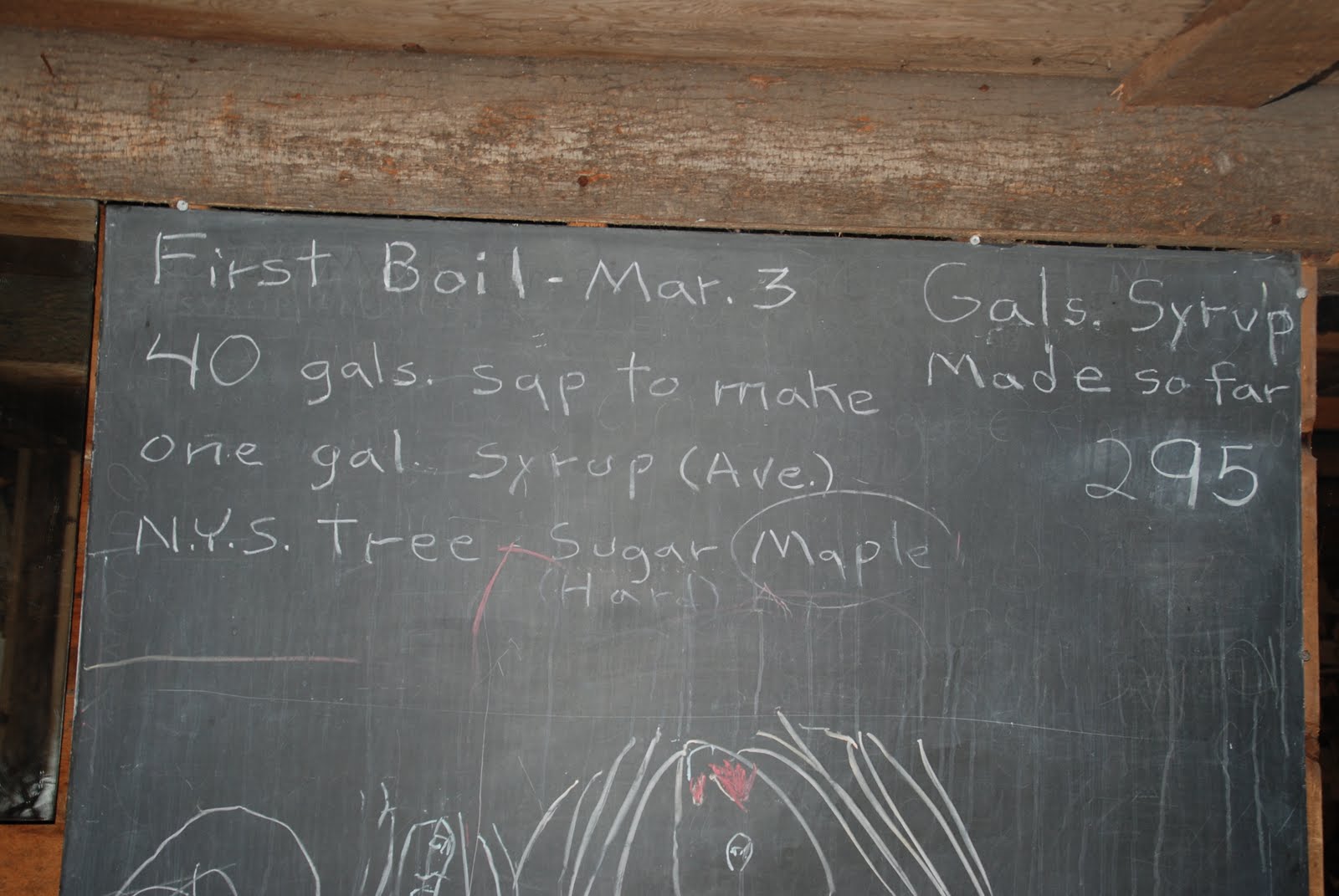
 When we saw how much work goes into making pure maple syrup, we began to understand why it is so costly. There is much work to do year round to prepare for the 4 to 6 week season of harvest. For example, it takes about 100 cords of wood each year to keep the fires going during the harvest season. The wood shed we are standing in was full, along with other stacks of wood used to feed the fire.
 We also learned that Northeastern US and Canada are the only places in the world where Sugar Maples grow naturally. New York is the third largest producer of maple syrup. After taking this tour we gained a newer appreciation for the work the Smith Family did each spring while tapping their Sugar Maple Trees and boiling the sap into syrup and sugar.
We started the day early, with several other Senior Missionaries at the top of Hill Cumorah, watching the sunrise and singing He Is Risen. We had a prayer together and then shared some donuts and juice.
 We were blessed to testify of Jesus Christ while giving tours at the Smith Farm from 9:00 AM until 12:00 noon and then watched the morning session of General Conference at the Palmyra Stake Center. We enjoyed seeing many of the families we had on tour at the meeting. We also watched the afternoon session of General Conference. By now it was 6:00 PM New York Time, so we went for a walk in the Sacred Grove.
 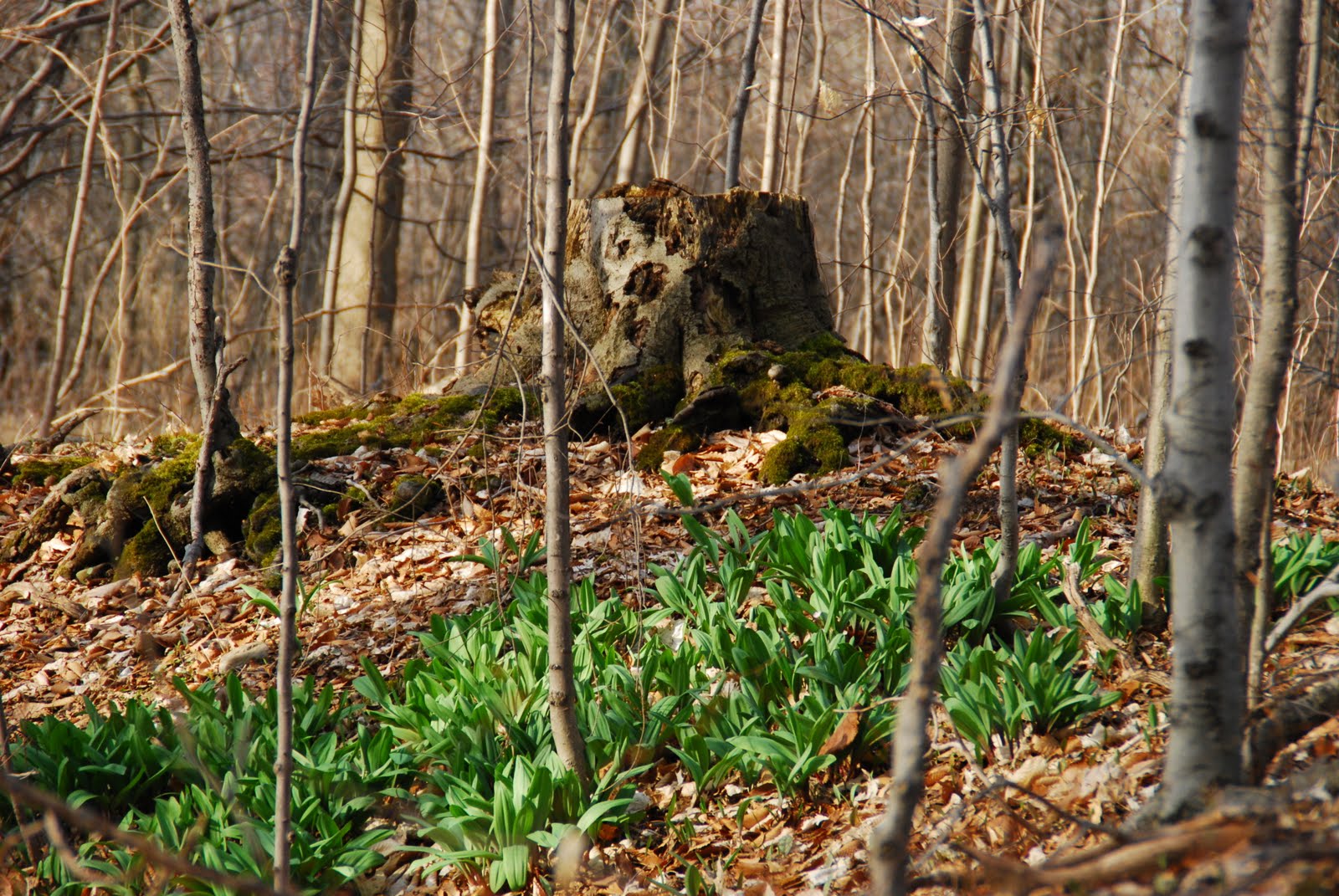 Spring is coming to New York and it is fun to watch the changes in the grove and other places.

 We even have flowers in bloom now!
 Then, what better way to end the day than a Skype session with family members! The Oregon family gather at Nola's for that Easter Dinner referred to earlier. Then, lucky us - we sort of joined them through Skype.
 Needless to say, it was a lovely day, if different from what we are used to. It will live long in our memories. We wish you all a blessed Easter Season and tesitfy of the divinity of Jesus Christ. He lives and loves each of us.
 Welcome to the Smith Family Farm. Please step inside the Welcome Center and join us for a tour. . .
 Hi, I'm Elder Watts, from Portland, Oregon. Welcome to the Smith Family Farm. Where are you from? Have you been to the sites before?
  This is Sister Watts. She will be taking you on your tour today. How much time do you have? What are you most interested in learning?
 This log home was built by the Smith Family the first year they owned the farm. They cleared approximately thirty acres of timber (the land had as many as one hundred trees per acre) and used some of this timber to build the home. This home is a recreation of the original home, built on the same location as the original home. It took twenty years of historical and archaeological research to recreate this home. Eleven members of the Smith Family lived in this log home.
 The recreated home was built by hand - using the same tools that the Smiths would have used. Tress were used primarily from the 100 acres. The pottery and ceramics were replicated based on fragments uncovered during the restoration using the same molds and glazes as the original fragments.
  This first room we enter is called the kitchen or "keeping room." Here the family gathered for meals and each evening for reading of the bible by Father Smith.
 This room (below) is the parlor. Here guests were welcomed; it was know as the"best room" for visiting and also as a sitting room for the family. However, its primary function was to serve as a master bedroom.
 In this home Joseph Smith learned of God, learned to love the scriptures, and pondered about religion. Here he read the scripture in James 1:5, "If any of you lack wisdom, let him [her] ask of God, that giveth to all men [women] liberally, and upbraideth not; and it shall be given him [her]. But let him [her] ask in faith, nothing wavering. . ."
 As Joseph pondered on this scripture, he decided to ask in prayer, so one morning in early spring, in the year 1820, he went out the back door of the log home. He entered a grove of trees on the family farm and knelt in prayer. As he prayed he saw God the Father and His son, Jesus Christ. They spoke to him, calling him by name, telling him they had a work for him to do.
 Three and a half years later, in this log home, Joseph was wondering about his standing with God, and was praying when a messenger sent from God, Moroni, a prophet who had lived on the American continent 4 centuries after Christ, appeared to him in the upstairs bedroom. He visited Joseph three times before daybreak and one time the next day. He came to instruct Joseph about a record written on gold plates, buried on a hillside close to his home. This record contained the fullness of the Gospel of Jesus Christ and was another testament of Jesus Christ. This series of events happened on September 21 and 22, 1823.
  At the age of 22, Joseph's older brother, Alvin, began to build this frame home. He started in November of 1822, but died in November of 1823 before the home was completed. Work on the frame home was finally completed three years after construction began and in November of 1825 the Smith family moved in.
 This first room we enter (pictured below), is the Parlor. This home has been restored and is 85% original. The parlor is the only formal room in the house and was used for receiving guests. The box on the dresser is a recreation of the box where Joseph originally kept the gold plated he retrieved from the Hill Cumorah, under Moroni's instructions. The original box is in Salt Lake City.
 The boards on the left side of the room (below) are original, with the original siding showing through in the cracks. This is also the room where Joseph hid the plates under the hearth.
 A small room off the kitchen served as a bedroom (below) when some of the daughters of the family would sleep at night to keep the fire going.
 The pantry was next to this small bedroom and food and dried spices and herbs were stored in this room. Lucy Smith, Joseph's mother, was skilled at ministering to the sick with herbs and her skills were often in demand.
 The kitchen was once again a gathering place for the family, and this is where Martin Harris had to report to Joseph Smith that he had lost the first 116 pages of the translated manuscript from the gold plates.
  This next room was the sitting room. The sitting room was an active, everyday workspace requiring a variety of household skills.
 This room also served as a master bedroom. The blanket, sheets and window coverings are all homespun, hand-woven, and stitched up in the popular fashion of the time.
 The floor covering is similar to the oilcloth covers that Lucy Smith made for floors, tables, stands and cupboards. She sold these covers and furnished the home with the money she earned.
 Across the road from the frame home you will notice the threshing barn and cooper shop. These were very important building in the running of the farm.
 We will visit the barn first. The original barn was demolished but this barn is located in the same space as the original barn. It is a renovated and relocated barn that belonged to John Young, Brigham Young's father. It was similar to the Smith barn and used for the same purposes.
 It is called a threshing barn because it wasn't for the use of animals, but instead for threshing and storing grains. The bins (below) were for storing the grain once it had been threshed.
 The tools are authentic for the time period when the Smith family would have lived and worked here. The large open floor space is for threshing the grain.
 The harness room was a multipurpose room, used for storing harnesses and tools and doing odd jobs around the farm.
 Beech trees are naturally hollow and made great storage containers for grain and other items in the barn.
 The Smith family tapped twelve to fifteen hundred maple trees in a single season to produce maple syrup and sugar. Fires had to be kept going continually during the season in the early spring when the sap was harvested. It is probable that they boiled the sap to syrup in the yard area outside the barn.
 Joseph, Sr. was a competent cooper. His greatest skill was in the making of barrels and kegs, but he also made buckets, tubs, butter churns, dye vats, and other common wooden containers.
 Coopering was a very careful and demanding skill, particularly if barrels were designed to hold liquids. Sap buckets, in particular were in great demand in the spring when the sap began to run in the maple trees.
 At one time Joseph hid the gold plates in the cooper shop, in a box under the floorboards to keep them safe. Receiving a prompting he removed them from the box and placed them under some flax in the loft. A malicious gang broke into the cooper shop, ripped up the floorboards and smashed the box, but didn't look in the loft and the plates were safe. As promised, Joseph through his obedience was able to keep them safe in his hands.
 I hope you have enjoyed the tour and felt the spirit of this place and these miraculous events. From here you can walk in the Sacred Grove. It is in this grove that Joseph Smith saw God the Father and His Son, Jesus Christ.
 This Sacred Grove is also the site where the 8 witnesses were able to hold the gold plates and later testified that they had handled the plates and knew of a surety that Joseph had translated the Book of Mormon by the gift and power of God.
 Enjoy you walk in the Sacred Grove and allow yourself to feel of the quiet reverence in this sacred spot. Thank you for coming!


.jpg)


